
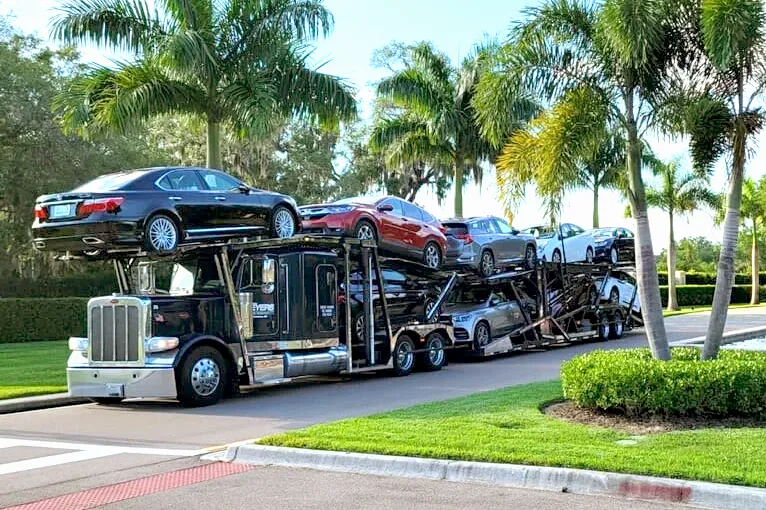
The roll-on/roll-off shipping method or RoRo shipping is one of the most common ways to ship a vehicle overseas. It is named so because vehicles are designed to roll on and off the vessel. What happens if the vehicle is incapable of starting, steering, braking and moving by itself? Many owners wonder if RoRo can ship non-running cars. The answer depends on the port, carriers’ rules, destination, vehicle condition, and the availability of special handling.
RoRo shipping is often best for shipping running vehicles. The port authority has approved equipment and procedures for dealing with non-running vehicles, but they will only accept non-running vehicles that can roll, steer, and brake. Since rules vary, it’s best to check everything before booking. This guide describes what you want to check and how to go about it.
Get an insight into RoRo shipping
RoRo vessels are designed to move. Vehicles are rolled onto the ship at the departure port and rolled off at the destination port. It is efficient for automobiles and vehicles like trucks, SUVs, buses, constructors’ equipment, and other wheeled units which can move safely.
The process is quite straightforward for a regular running vehicle. The car gets to port, inspected, driven on-board, strapped down while at sea and driven off once opened. Since the method relies on rolling movement, non-running vehicles need extra attention.
If the vehicle is not able to start but can still roll, steer and brake, it may be easier to deal with that than one that may have locked wheels or missing keys, flat tires or no brakes. The harder RoRo shipping is as a vehicle’s motion becomes further limited.
Determine the type of non-running state
Does RoRo shipping allow non-running vehicles? Clearly define what non-running exactly means. A dead battery is completely different from a car with no wheels or steering locked.
First, check the wheels to see that it rolls freely. Next, check whether it can steer and brake. Be clear to state that it just needs a jumpstart. If it has a transmission problem, missing keys, flat tires, collision damage, or no brakes, you must explain before booking.
For example, if a classic car does not start but rolls and steers, it treated differently from a collision-damaged SUV that cannot move.
A port may be capable of towing or pushing one kind of vehicle but may reject another if it cannot safely man oeuvre.
The more accurate your information is the easier it’d be to assess if RoRo is feasible or if container shipping would work better.

Make Sure Port and Carrier Rules are Confirmed Before Booking
Not all ports and RoRo carriers treat non-running vehicles the same. Some might allow non-runners with prior approval and extra charges. Some people may require the vehicle to be functional. The port of destination may also have more strict unloading regulations than that of departure.
Before booking, ask direct questions: Is the departure port non-running vehicle friendly? Is the vessel operator acceptable to them? Is the destination port capable of unloading them? Can we offer special handling services including towing, forklift, and winch? Are there any additional fees?
Just Because a vehicle is accepted at one port does not mean it accepted at another. International shipment has several stages, and the vehicle must be workable at both ends.
Carson Shipping can help customers assess their options when it comes to route choice. The company can ensure whether RoRo or another option is more suitable depending on the condition of the vehicle. Go to https://www.carsonshipping.com/.
Differentiate Between RoRo And Container Ships
If RoRo is not feasible, container shipping may be a more suitable alternative for certain non-running vehicles. The loading of cargo controlled through container shipping, depending on equipment and service availability. This could benefit collector vehicles, vehicles that are damaged, project cars and cars that need extra protection.
Container shipping could cost more and require different preparations, however, it can offer more flexibility for non-driveable vehicles. The right choice will depend on the condition of the vehicle, worth, destination country, port rules and your budget.
For example, container shipping might have better options for carriage of delicate bodywork or rare parts of a non-running classic car. If a vehicle merely has a weak battery (causing it not to start) but rolls and brakes, RoRo may still be possible if approved.
Prepare The Vehicle And Documents Carefully
Preparing your vehicle for shipment is essential. Take away personal belongings, valuables, toll tags, loose items in the car, dash cams or similar or anything else not approved for an international shipment. Inspect the pressure on your tires. Secure anything that is loose in the vehicle. Don’t make the vehicle inaccessible for loading.
If the vehicle does not operate, please provide a clear and written description. Please inform us if it rolls, steers, stops, has keys, works on a battery or special equipment. The shipping team can also know what they’re dealing with thanks to photos and videos.
Written records matter just as much. International vehicle shipping may require the vehicle title, bill of sale and/or export documents, photo ID, customs forms, lienholder authorization if financed and destination paperwork. Any problem related to the documentation can delay the shipment despite the vehicle being ready.
Content Conclusion
Will RoRo shipping be able to handle vehicles that don’t run? Occasionally but not ever. RoRo is mainly used for vehicles that at least driven (and preferably also steered and braked). If the vehicle can’t move, or is missing its keys, has a flat tire, accident damage or can’t brake, we may need special approval, or container shipping may be a better option.
The best approach is to honestly describe the vehicle, confirm port and carrier rules, compare shipping methods and prepare documentation early. For practical advice for international auto shipping, visit https://www.carsonshipping.com/.
